
Nano, Micro or Macro? How to Choose Beauty Creators by Funnel Goal
Beauty brands still pick creator tiers by follower count instead of campaign objective. Here's how to map nano, micro and macro creators to each funnel stage in Brazil — and measure each one correctly.
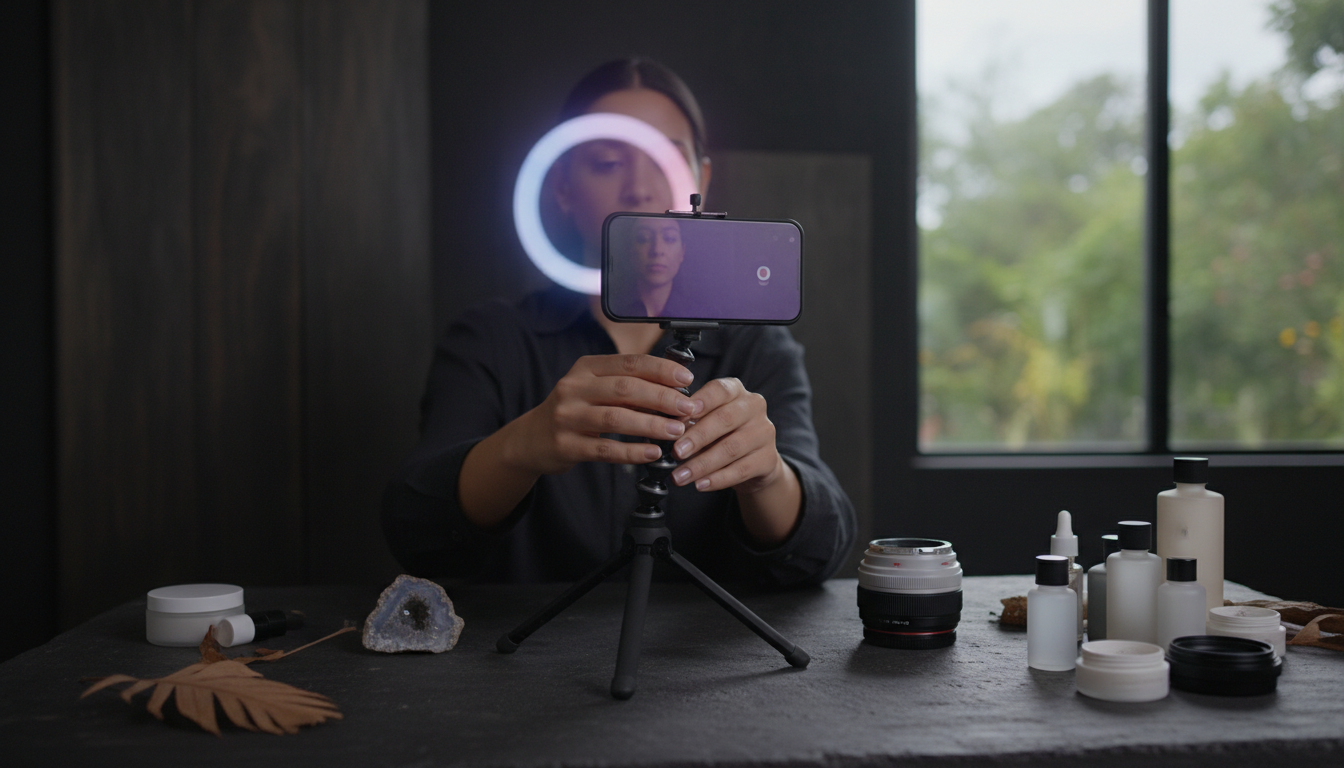
Beauty brands investing in creator marketing in Brazil still make the same mistake: they choose creator tiers based on follower count, not campaign objective. The outcome is predictable — misallocated budget, blurry KPIs, and an end-of-campaign report that can't justify the next one.
The right question isn't "how many followers does this creator have?" It's: what funnel stage does this campaign actually need to move?
Why Creator Size Isn't the Right Metric
Brazil's beauty creator ecosystem is unusually fragmented — tens of thousands of regional nano and micro creators sit alongside a smaller pool of national macro and mega influencers. A consistent pattern across influencer marketing data holds true here too: engagement rate falls as follower count rises. A mega creator delivers reach; a nano creator delivers peer trust. These are different assets for different jobs.
Treating every tier as interchangeable — with fee as the only variable — is why so many beauty campaigns generate buzz but little trackable revenue.
Mapping Creator Tiers to the Funnel
Top of Funnel: Macro and Mega Creators
When the goal is awareness — a brand launch, a new category entry, share of voice against entrenched competitors — macro (100K–1M followers) and mega creators deliver fast reach and image association. This is the right tier for KPIs like impressions, unique reach and unprompted mentions.
Middle of Funnel: Micro Creators
For consideration — educating on an ingredient, comparing routines, showing before/afters — micro creators (10K–100K followers) balance meaningful reach with genuine engagement. They tend to own a niche (oily-skin skincare, curly hair care, makeup for mature skin), which raises audience relevance for beauty brands with a specific value proposition.
Bottom of Funnel: Nano Creators
When the goal is direct conversion — a discount code, an affiliate link, e-commerce traffic — nano creators (1K–10K followers) typically deliver the best conversion rate per dollar spent. The audience is small, but the relationship reads as genuine, which translates into purchase trust.
The Costliest Mistake: Picking a Single Tier
The most common error — especially among international brands entering Brazil — is putting 100% of budget into mega creators because it "feels more premium," or into micro creators because it's "cheaper." Either way, the campaign covers only one slice of the funnel and leaves money on the table everywhere else.
The highest-performing beauty campaigns in Brazil deliberately blend tiers: a handful of macro/mega names for initial reach and credibility, a layer of micro creators to nurture consideration within specific niches, and a continuously active network of nano creators to convert and generate ongoing social proof.
Measuring Each Tier the Right Way
Using the same KPI across every tier is another classic mistake. Measurement needs to track the objective:
- Top of funnel: reach, impressions, share of voice, brand sentiment
- Middle of funnel: engagement rate, saves, click-through, watch time
- Bottom of funnel: redeemed codes, attributed sales, conversion rate per code
This is where most brands get stuck: without closed-loop data connecting post to purchase, it's impossible to know whether the nano creator actually converted better, or whether the mega creator generated demand another channel simply captured later.
A Practical 5-Step Framework
- Define the funnel objective before selecting any creator.
- Choose the tier based on that objective, not on available budget or creator fame.
- Blend tiers in full-funnel launch campaigns, weighting spend toward the priority stage.
- Set the right KPI per tier, resisting the urge to compare nano engagement to macro reach.
- Reallocate spend based on real performance, not intuition — which requires data linking post, code, purchase and review.
That last point separates an amateur creator operation from a data-driven one. bfluence, B4A's creator ecosystem, connects tier-level activation to purchase and review data through BIA, making it possible to see exactly which mix of nano, micro and macro actually drove incremental sales — not just engagement.
The Takeaway
Beauty creator marketing in Brazil isn't about finding the one "right" creator — it's about building a tier mix aligned to each funnel stage, measured with the right metric for that stage. Brands still optimizing for follower count are competing on prestige. Brands optimizing for funnel objective, backed by closed-loop data, are competing on results.


B4A Serviços de Tecnologia e Comércio S.A.
Avenida Jornalista Roberto Marinho, nº 85, 11º Andar (Conjunto 112), Cidade Monções - CEP 04576-010 - Cidade de São Paulo, Estado de São Paulo